23 May 2024

212

6 minutes
Why do 90% of startups fail? The answer lies in problematic interviews

A famous quote attributed to Henry Ford reads: ‘If I had asked people what they wanted, they would have answered: ‘Faster horses’. However, as we know, Ford did not create a faster horse. He asked about people’s true desires. Customer development is not so much about understanding what people want as it is about understanding why they want it.
Ask: ‘Why do you want a faster horse?’ How would you use it? If a customer wants a faster horse to transport goods around town, a car might be a great invention. When the customer wants a horse to win a race, a car is a useless invention.
Asking the right questions and listening to the people who will potentially use your product is the only way to design it right. We have already shared some ideas in the article ‘How to create a product that customers will love? It’s time to dive deeper and discuss problem interviews, why every project needs them, and how to conduct them.
Why do products fail?
Did you know that about 90% of startups fail? ‘It was a stupid idea,’ businessmen complain. However, it’s not the idea itself that fails, but the way it was handled. The imagination paints a picture of customers queuing up to buy goods. But in reality, many products are invisible, incomprehensible and – worst of all, and unfortunately, often – irrelevant. Even if the idea seemed brilliant at first.
CB Insights, a technology market analytics platform, has collected real-life stories of startups that failed. After clustering the data, the platform’s analysts discovered a pattern in these stories. They identified 12 main reasons for startup failures. The top five show that failures mainly occur because startups run out of money, lose competition, have flawed business models, fail to comply with legal regulations, or because there is no market demand for their product.
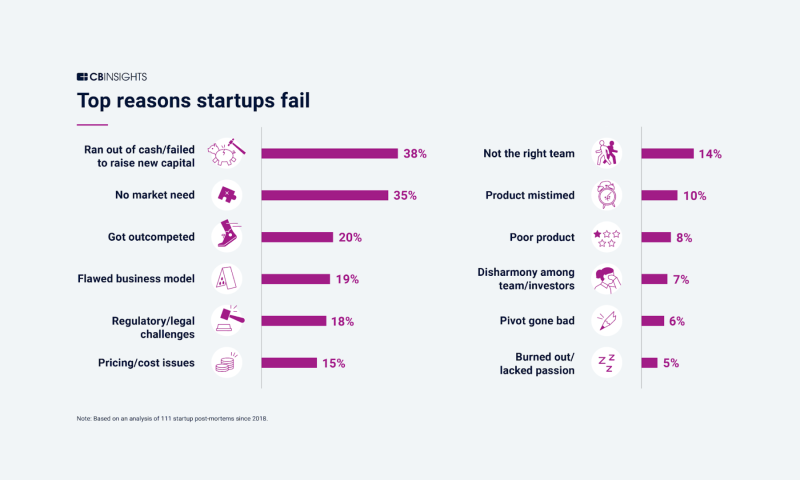
Most businesses fail because the product does not meet the market. You create a product that people don’t need, don’t know people’s interests, don’t study their needs, or ignore their preferences. The product must meet a strong market demand for the business to be successful.
Rescue problematic interview: what is it?
Problem interviewing is one of the customer development tools that helps to test the hypothesis about potential customers’ pain points, purchase motives, and criteria for choosing goods or services. It collects information that allows you to see customers’ problems from the inside. This helps to more accurately identify the target audience segment, improve the product, and think through the market promotion strategy. Simply put, it’s a conversation consisting of the right questions to identify the problems of a future client.
The interview helps to get feedback from the source, which means that an idea of the future success of the product among customers and its profitability for the company is formed, which helps to avoid serious financial losses. Therefore, it is important not to skip this stage in the product development process.
The Customer Development methodology is based on the fact that customers and relationships with them are the key to successful company development and the creation of a product in demand. This approach was developed by American entrepreneur Steve Blank. He said that before developing a product, it is necessary to find out whether it will help solve a problem. To find out, problem-based interviews and other research methods are used.
How to conduct a problematic interview?
Before conducting a problematic interview, it is important to think carefully about and formulate a list of questions. It is advisable to use different sources to conduct your research. These can include forums, Google Forms, messengers, telephone surveys, and live interviews. Personal interaction with users is especially effective because it allows you to see the non-verbal behaviour of potential customers.
- Define the hypothesis. Clearly state the assumption, identify the action that will help test it, and establish quantitative indicators to measure the outcome. Next, draw a conclusion that determines further work. For example, if the hypothesis is confirmed, the app will be launched for testing, if not, it will be sent back for revision.
- Create a list of questions. It is important that they require a detailed answer from the survey participants. Remember, the more the client talks, the more information you will get. However, the conversation should be on track, so be careful and specify the questions if necessary.
- Gather a group of participants. If you already have a customer base, conduct the survey through email newsletters, social media, or phone calls. If you're starting from scratch, create a portrait of your target audience and motivate potential buyers to participate in the survey through forums, lead magnets, conferences, exhibitions, etc. Use a gift, discount or bonus to attract participants.
- Conduct the interview. Be sure to record the interviewees' responses using a dictaphone, video or notes. Try to get as many details as possible from each participant. This will provide you with more detailed information.
- Analyse the data collected and evaluate the hypothesis. Systematise the information and find patterns in the responses. Look at how they differ, think about what this is about. Then summarise to confirm or reject the hypothesis. Continue with your plan.
During a problem conversation, listen carefully to the client and encourage them to talk about the problem. The main task is to find out how the target consumers solve a particular problem, what experience they had in solving it, and what difficulties they faced. The questions should not push the consumer to evaluate the product or contain its advertising.
Remember that a problematic interview is a tool for researching the target audience and its needs, not a pitching method. Use it to develop a test version of a product, launch a finished product on the market, or gather information to launch a startup.
For example: an English-language bookstore.
Hypothesis: customers are dissatisfied with the delivery of books from Amazon because the service is expensive and takes a long time. If the reader survey shows that more than 70% of customers confirm this information, we will launch a test ad about inexpensive and fast delivery of books in the original.
The result of this stage is the formation of hypotheses and their evaluation for reliability. For a more detailed test of your judgements, use a table that contains all the necessary steps: proposition, action to test, result metric, conclusion. To create one, use the Google Tables service.
How to communicate effectively with customers?
Rule #1 – To have a conversation, we need a conversation plan
A conversation plan is based on your hypotheses about the needs of consumers. After politely greeting the other person, you should tell them in general terms what you want to talk about, or rather, listen to. Your task is to get the other person talking. It is important to immediately find out the interlocutor’s attitude to the problems that interest you. Ideally, this should be done when you arrange a meeting and time for the conversation. If the conversation happens suddenly, then immediately indicate what will be discussed.
You can use questions like these to find out how the other person feels about the problem:
- Have you ever…?
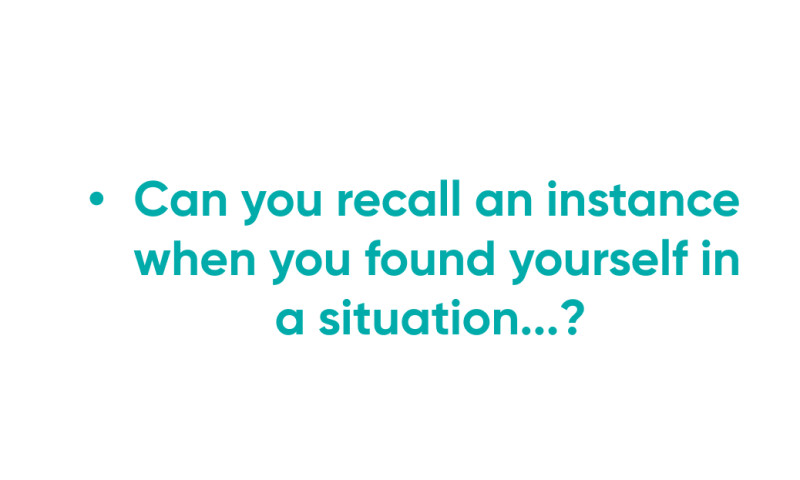
- Have you ever been in a situation of…?
- How often does… happen to you?
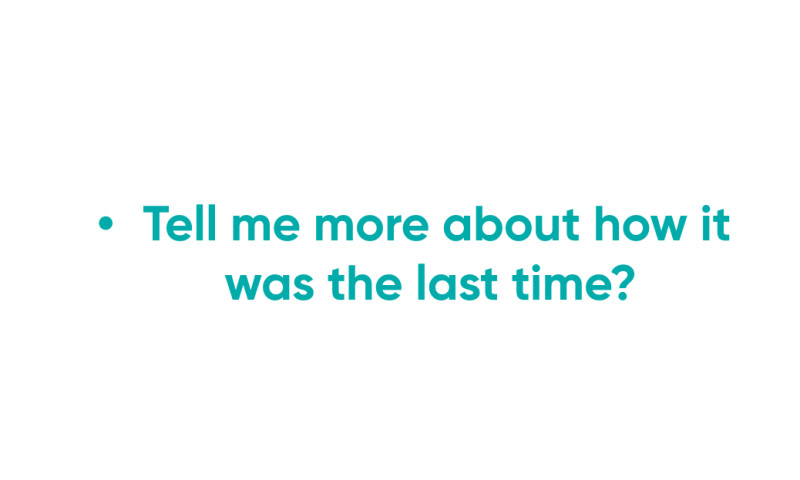
- When was the last time you were in a situation of…?
- Are you worried about…?
- How does … affect your life?
It is quite possible that your interlocutor will have absolutely nothing to say on the subject, and will be tempted to talk about the topic in the abstract, without relying on personal experience. You should learn to distinguish between such situations and not take what they say as facts. An interlocutor who has no real experience can be useful to you as a link to other people. Ask them to introduce you to their friends who have real experience in the topic you are interested in.
A hypothesis map as a conversation plan is much more convenient than a list of questions, a conversation script, or any other linear plan, because the interlocutor, answering your question, may go completely differently than you expected. If the other person starts talking about how you have hypotheses related to other issues, you can quickly see how the information relates to the relevant hypotheses and continue to dig into the issues raised. Then, when this direction is exhausted, you can return to the original problem.
Rule #2 – Don’t let yourself talk, let the other person talk
The most common mistake of novice interviewers is to slip into a dialogue or even a monologue, talking enthusiastically about their product. This is something you absolutely must not do. As soon as the interlocutor realises that you have invented or developed something, he or she stops speaking sincerely and starts either praising or arguing with you. The interview turns into a discussion of a product that usually doesn’t exist yet. If this happens to you during the interview, then the interview should be considered unreliable.
Rule #3 – ask more open-ended questions
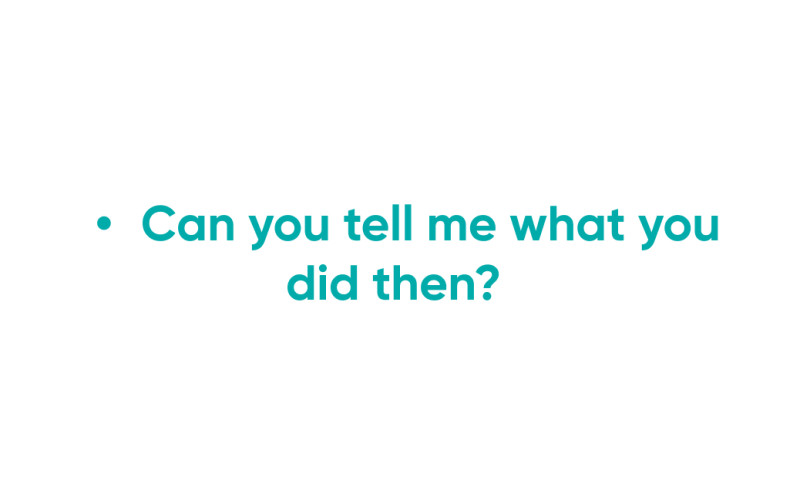
Answers such as ‘yes’, ‘no’, ‘sometimes’, etc. provide very little information. To get more information, ask open-ended questions – those to which the other person will have to give a detailed answer.
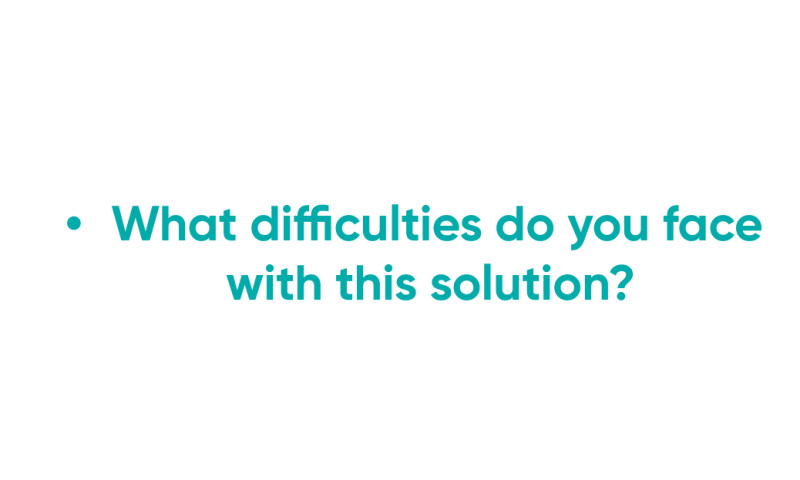
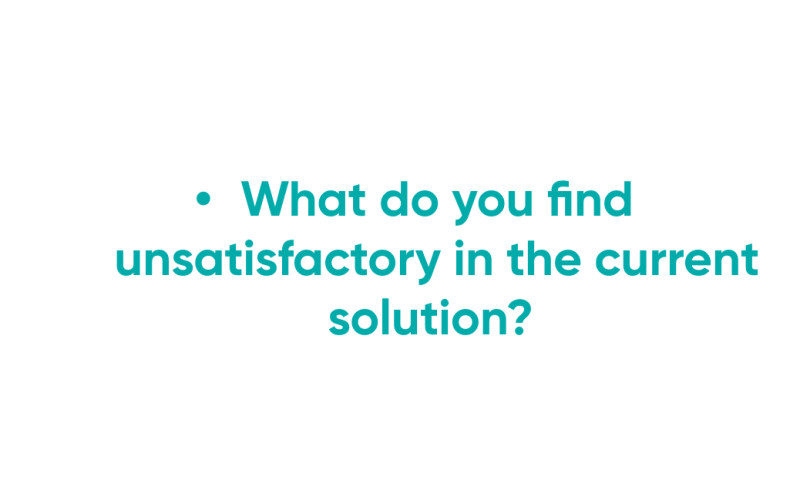
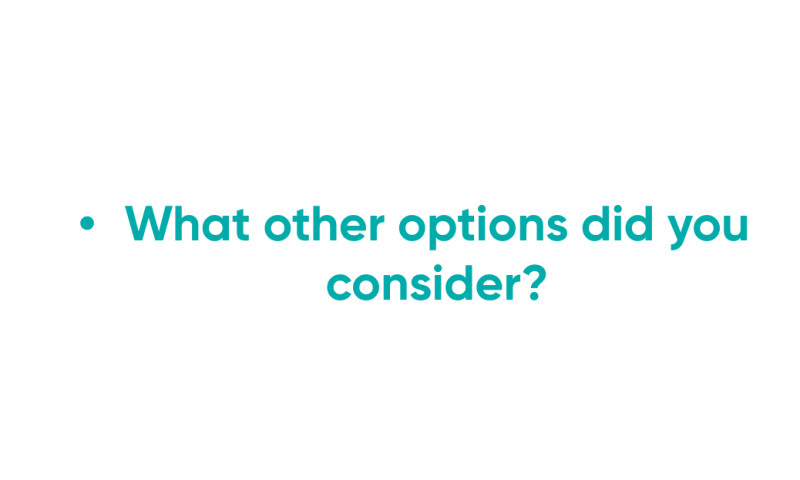
00/ 00
Of course, questions should be adapted to the course of the conversation. If the person you are talking to tells you that the solution they have chosen was the only one at the time, you should not ask what other options they have considered.
Rule #4 – Ask as specific questions as possible and look for the value of solving customer problems
Try to ‘dig up’ details and facts from the interviewee’s experience by finding out specific numbers, names, dates, periods, number of repetitions, places, sources of information, etc., as these facts give us information to assess the degree of awareness.
If a person agrees with you that they have an overweight problem and says that they do sports from time to time, it is very important to find out how often and what kinds of sports they do. If they say they swim in the pool, it is important to find out how often they go to the pool, which pool, how they chose it, how long they swim for, whether they eat after sports, and how they eat in general. This is important because the truth lies in these specific facts.
An unclear interlocutor leads to unnecessary features in products and even unnecessary products. Insufficiently tested hypotheses lead to significant costs in later stages.
Finding out the specific circumstances of the interlocutor’s experience helps to clarify not only the existence of problems and their awareness, but also the value of solving these problems.
Value can be in the form of economic benefits or savings, or the reduction of risks, both financial and reputational.
Questions that will help you find out the value:
- Why is it important for you to solve this problem?
- What results have you achieved in the past with similar problems?
- What happened when you did not solve this problem?
- What difficulties did it cause?
- What costs did it incur?
- What did you lose in this situation?
- How much time or money did you spend to solve this problem?
One of the most important results of problem interviews is the value of solving consumer problems, expressed in terms of money or time saved or earned by solving the problem.
Rule #5 – Ask only about past experiences and avoid opinions, abstract reasoning and speculation about the future
This is the second most common mistake of novice interviewers – to allow the interlocutor to speculate in the abstract about what he or she would do if he or she were in the situation we are interested in. These arguments are of no direct use, as our interlocutor may do something completely different when faced with such a situation. Numerous experiments have shown that people act quite differently in conditions of danger, stress, need, and social pressure than when they are not in danger.
These are the most basic rules that will help you start practising problem interviews. Remember that the success of your products depends on how well you understand your customers.