19 Oct 2024

545

15 minutes
How to make decisions in business, what are perception errors?
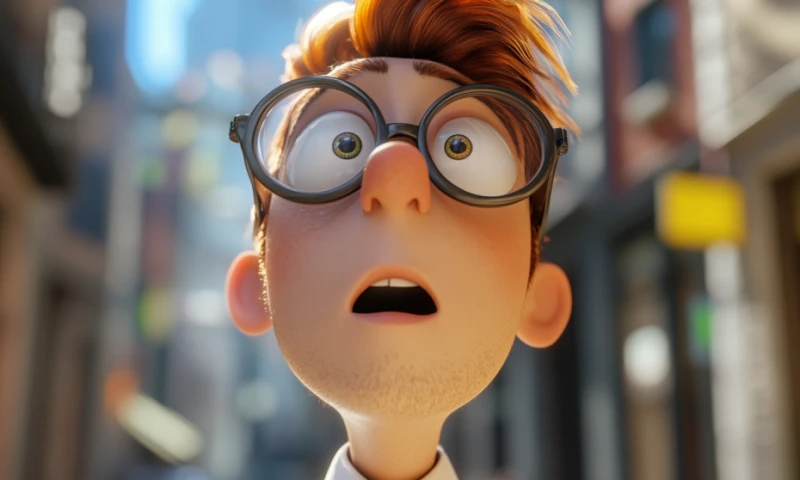
How to make decisions in business, what are perception errors?
Business owners can be easily swayed by illusions when making decisions. At a time when social media is full of success stories and potential contractors present their cases in a way that suits them, the ability to think critically and analyse the situation is more important than ever.
What are perception errors, how to avoid them, and how to make informed decisions in business?
The influence of perception on decisions
When making decisions, it is important to take into account not only your actions, counteractions and support, but also the correct perception of the situation. Errors of perception or analysis can occur at any stage. They arise due to various cognitive distortions, mood, circumstances, your experience and many other factors.
How does our perception work?
Perception is a complex thing that does not always reflect reality. It is influenced by many different factors: our character, education, experience, emotions, and even the time of year or day. People often see the world through their own prism of perceptions, and this can lead to false conclusions.
What are the effects of perception errors?
- Interpretation of actions - you may think you did everything right, but in fact you missed important details.
- Assessment of results - incorrectly assessed results can lead to even bigger faux pas in the future.
- Decision-making - your perception shapes your subsequent decisions, and if it is wrong, you risk making the same mistakes.
Cognitive distortions and their impact
Perception depends not only on education or experience, but also on cognitive distortions – errors in the perception of information caused by external factors. For example, the systematic survivor bias.
During the Second World War, American designers discovered that aircraft returning to base had holes in their wings, fuselage and stabilisers. It seemed logical to them to strengthen these parts of the aircraft. But the mathematician Abraham Walt pointed out that they were only seeing the planes that had survived the battle. Others with damaged cockpits, engines or fuel tanks did not return. This meant that it was not the parts that had survived the shelling that needed to be strengthened, but those whose damage was fatal.
This example shows how incomplete information can lead to erroneous conclusions. If we focus only on what we see and do not take into account what we do not see, we make the wrong decisions.
Other misconceptions....
One of the most well-known misconceptions is the Dunning-Kruger effect. People who do not have sufficient knowledge often think they are experts and make wrong decisions, which only exacerbates their mistakes. This effect is especially dangerous in business, where the inability to admit mistakes can lead to serious losses.
This is the case when a business is inherited by an inexperienced successor.
For example, Maurizio Gucci, the grandson of the founder of the Gucci fashion house, had no experience in managing the company and mismanaged its assets by selling most of his shares to investment funds.
How to make effective decisions and avoid perception errors?
To minimise the negative impact of cognitive distortions, it is important to
☝️Analyse your mistakes – don’t be afraid to admit your faults and draw conclusions.
☝️Get an outside opinion – a professional’s perspective will help you see what you might have missed.
☝️Continuous learning – developing critical thinking and understanding cognitive errors will help you better understand your decisions.
Perceptual errors can occur at every stage of the business journey, from planning to analysing results. Working on them will help you make more informed decisions, avoid false conclusions, and achieve better results.
Let’s take a look at the most common illusions that can seriously affect your business and life
1. The Dunning-Kruger effect: a fool does not know he is a fool
The illusion is that people with a low level of knowledge often do not realise their mistakes due to their limited competence, they may not understand that they have made a mistake and continue to act incorrectly.
A copywriter who has no knowledge of SMM and takes on SMM projects runs the risk of losing, because he or she does not have the information necessary to succeed and does not deliver the results the client expects. And without analysing past mistakes, there is a risk of repeating them in the future.
2. ‘Winners are not judged’
It is a mistake when the evaluation of a decision is based only on the outcome and not on the decision-making process. The person believes that if the result was successful, then the decision was correct. But it could be a fluke.
?You win at a casino and decide that it was the right decision. However, the next time you lose everything.
Or you didn’t insure your car, drove it for a year without accidents and decided that it was a waste of money. Such a mistake can lead to serious losses in the future if an accident occurs.
3. Reward for luck, not effort
Another common mistake is to reward people for random luck rather than for their real effort.
Your sales rep exceeded their target this month due to external factors, such as increased market demand, and you reward them with a bonus. The other rep, who worked harder and more diligently but fell short of the target due to unfavourable circumstances, is not rewarded. This creates unfairness and misjudgement of real efforts.
How to avoid these mistakes?
- Analyse not only the result but also the process. It is important to understand why the result was positive or negative.
- Reward effort, not luck. Evaluate employees for their efforts and the quality of their work, not just the end result.
- Avoid jumping to conclusions. You should give yourself time to analyse before making decisions.
Error avoidance algorithms
Unfortunately, most entrepreneurs do not develop systems to help them avoid making the same mistakes again.
Successful business people don’t just learn from their mistakes – they develop clear algorithms that help them avoid them in the future. If you’ve encountered a problem, this is a great chance to create a system that will prevent mistakes from happening again.
If it turns out that a certain action has led to losses, it is necessary not only to draw a conclusion but also to create a specific plan on how to avoid this in the future – for example, to make changes to processes, to establish new control methods.
The quarantine served as an incentive for the development of online education, which allowed school owners to save money on renting premises and equipment, as well as reach a larger audience from other locations.
Algorithms to avoid mistakes
A key part of the learning process is the creation of algorithms and patterns. Often, even when entrepreneurs realise their mistake, they don’t develop a system to avoid it in the future.
Imagine that your life is a tree you are climbing, and each branch is a decision point. If you choose the wrong branch, it can lead to a dead end or even make you fall. But what makes the difference between failure and success?

- If you analyse your mistakes, instead of returning to the same point and following the same branch, you will find another path that will lead you to your goal.
- If you don't analyse, you'll keep coming back to the place where you went wrong.
Irreversible mistakes: when things go wrong
The biggest fear of every entrepreneur is an irreversible mistake that completely nullifies all their previous achievements. This can demoralise anyone and make them give up.
But it’s important to understand that if you have the right algorithms and patterns in place, you can quickly return to the point where the fatal mistake was made and continue your journey with even more confidence.
How to create error avoidance algorithms?
- Analyse each error. Carefully analyse each case where you encountered a problem and determine what exactly went wrong.
- Develop algorithms for prevention. Make specific changes to your processes and actions to avoid repeating the same mistake.
- Training and application. Algorithms should be implemented in your daily operations and shared with the team so that everyone knows how to avoid previous mistakes.
Mistakes are part of the path to success, but only if you know how to learn from them. Successful entrepreneurs not only draw conclusions from past mistakes, but also create algorithms that help them avoid them in the future. This allows you not only to avoid repeating the same mistakes, but also to move forward faster, more confidently, and with more motivation.
And if you want to make informed decisions in business and avoid fatal mistakes and millions in failures, you are welcome to Wow Mentor!